
In the global sanitary ware industry, bathroom brand comparison has become a common research topic among engineers, procurement teams, and project developers. Search queries such as European vs American bathroom brands, best shower system brands for hotels, and OEM bathroom manufacturer vs branded products reflect a growing need to understand not just products, but the engineering logic behind them.
However, most comparisons only focus on brand reputation or price positioning. In real-world applications, especially in hotel construction, residential developments, and commercial projects, performance depends far more on system design, water conditions, and installation environments than on brand names alone. This is why understanding the global bathroom industry as a structured system is far more useful than treating it as a simple brand ranking exercise.
European bathroom brands are widely recognized for their focus on engineering precision, long-term stability, and strict compliance with international standards. Companies such as Hansgrohe, Grohe, Duravit, Villeroy & Boch, and Roca represent this category.
Their products are designed around the concept of system consistency, where water flow control, thermostatic performance, and user experience are optimized under controlled conditions. These brands are often specified in luxury hotels and architectural projects where design uniformity and regulatory compliance are critical. The engineering philosophy behind this category is that the system is predefined and the application environment is expected to match it.
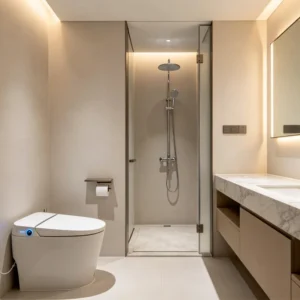
In contrast, American bathroom brands are built around scalability, practicality, and maintenance efficiency. Brands such as Kohler, American Standard, Moen, and Delta Faucet are widely used across residential, commercial, and hospitality projects.
Among them, Delta Faucet is particularly known for its engineering-driven valve systems and focus on flow control reliability in everyday use. The overall design philosophy of American brands is not extreme precision or luxury positioning, but rather consistent performance across large-scale installations combined with strong serviceability and replacement support. This makes them highly suitable for projects where maintenance efficiency and lifecycle cost control are important.
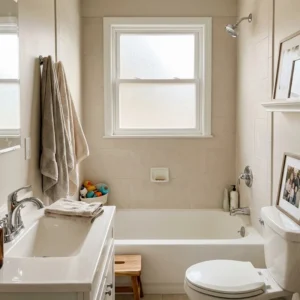
Between high-end European systems and mass-market American solutions, there is a significant category of mid-tier global brands that serve a wide range of applications. A representative example is TOTO, which combines Japanese precision engineering with global manufacturing scalability.
These brands are commonly used in residential developments and mid-range commercial projects where both performance stability and cost efficiency must be balanced. Their product systems are typically standardized but flexible enough to adapt to different regional markets, making them a common choice for international procurement strategies.
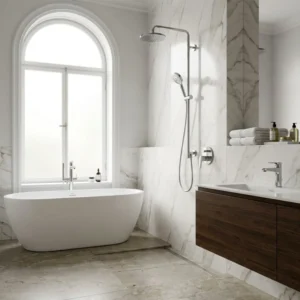
While branded products dominate market visibility, a large portion of real engineering solutions comes from OEM manufacturing systems. Unlike traditional brands, OEM suppliers are not defined by fixed product lines but by their ability to adapt technical parameters based on project requirements.
This includes adjusting thermostatic response accuracy, flow rate stability, cartridge structure design, material selection, and compliance standards for different markets. OEM systems are especially important in complex environments such as hotels, high-rise buildings, and international projects where water pressure conditions, installation environments, and regulatory requirements vary significantly.
In these scenarios, the challenge is not finding a better brand, but designing a system that performs reliably under real-world conditions.
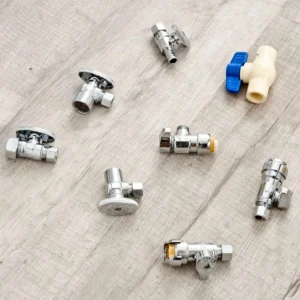
In actual procurement and engineering practice, no single bathroom brand can fully satisfy all project requirements. European systems may offer excellent precision but limited flexibility in cost structure. American brands provide scalability but are often standardized in design. Mid-tier brands offer balance but may lack deep customization capability.
This creates a structural gap between standardized product systems and real engineering demands. Issues such as unstable water pressure, inconsistent installation environments, and regional compliance differences often cannot be solved by brand selection alone, which is why system-level thinking is becoming increasingly important in modern projects.
At Jekare, we operate within the OEM engineering layer of the global bathroom industry. Instead of positioning ourselves as a traditional consumer-facing brand, we focus on developing customized shower and valve systems based on real engineering conditions.
Each project begins with understanding the actual application environment, including water pressure stability, usage frequency, temperature control requirements, and compliance standards across different markets. Based on these parameters, we design and manufacture systems that are aligned with real-world performance needs rather than fixed product limitations.
In many cases, the most effective solution is not choosing between established brands such as Hansgrohe, Grohe, Kohler, or Delta Faucet, but developing a system that is engineered specifically for the project environment.
The global bathroom industry is gradually shifting away from pure brand-based competition toward engineering-driven system design. As project requirements become more complex, factors such as water stability, installation environment, and compliance requirements are becoming more important than brand identity itself.
This is particularly evident in hotel development, commercial construction, and international procurement projects, where OEM bathroom system suppliers are playing an increasingly important role in bridging the gap between standardized products and real-world engineering conditions.
A: Because they follow different engineering standards, cost models, and design philosophies.
A: European brands like Hansgrohe, Grohe, Duravit, and Villeroy & Boch.
A: Kohler, American Standard, Moen, and Delta Faucet.
A: It is a mid-to-high range brand focused on practical engineering and durability.
A: Brand products are standardized, OEM systems are customizable.
A: Usually due to water pressure, installation conditions, or system mismatch.
A: When projects need customization or multi-market compliance.
A: A factory that produces customized products based on project needs.