
Material selection is one of the most critical decisions in kitchen faucet development. It determines not only how a product looks, but how it performs over time, how it withstands water conditions, and how it reflects your brand’s quality standards. For buyers, designers, and product managers, understanding what goes into a faucet—from internal components to surface finishes—is essential when sourcing reliable kitchen sink taps or developing a competitive OEM product line.
Working with an experienced manufacturing partner like Jekare means material decisions are not made in isolation. They are integrated into engineering, production, and long-term performance planning. So what exactly goes into a modern faucet, and how should you evaluate it from a B2B perspective?
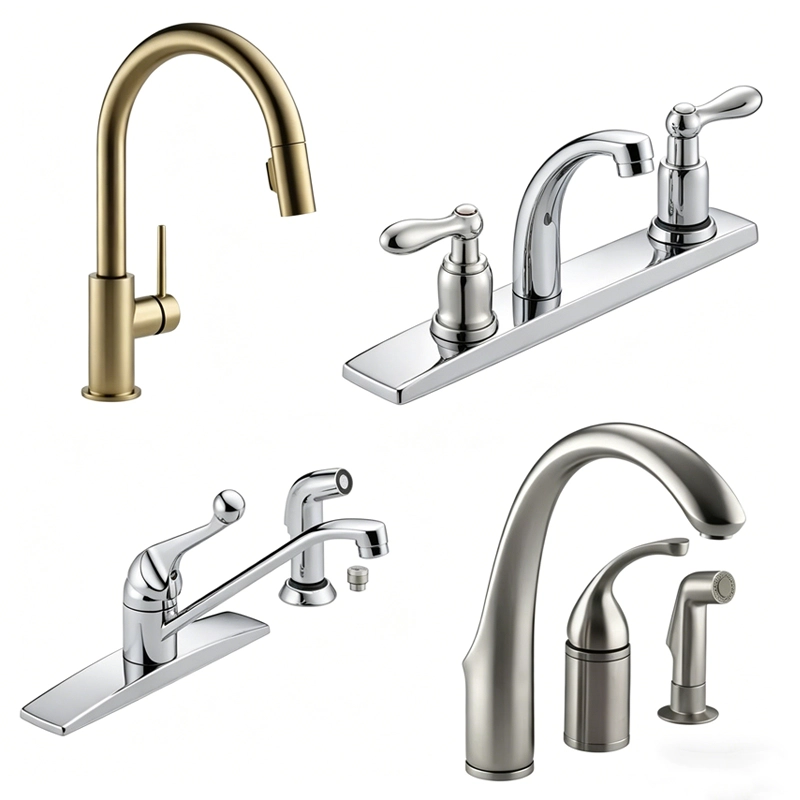
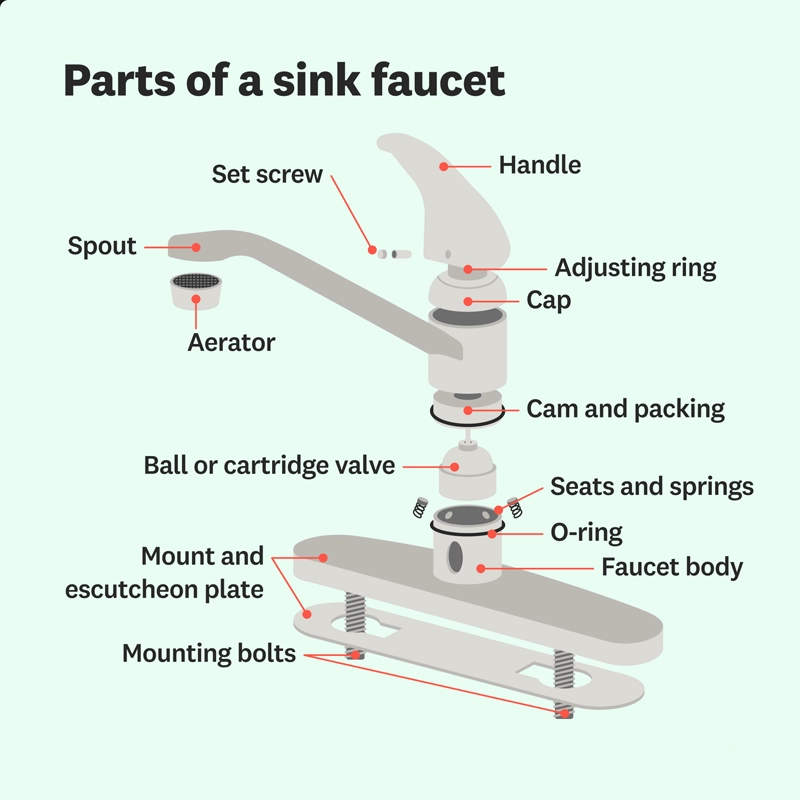
A typical kitchen faucet with sprayer is a multi-material assembly designed to balance durability, cost efficiency, and manufacturability. Each component plays a specific role.
Brass (CU-ZN Alloys)
The most widely used material for premium faucets. A brass kitchen faucet offers excellent corrosion resistance, strong structural integrity, and compatibility with various finishing processes. For high-end positioning, a brass kitchen tap provides both durability and a solid, premium feel.
Stainless Steel (304 / 316)
Preferred for modern, minimalist designs. Stainless steel resists corrosion and does not require plating, making it ideal for PVD or brushed finishes. Grade 316 is especially suitable for coastal or high-humidity environments.
Plated ABS or Zinc Alloy
Used in cost-sensitive product lines. These materials allow complex shapes and reduced weight, but require precise plating control to ensure adhesion and durability. Poor plating can lead to peeling or surface defects over time.
Ceramic Disc Cartridges
The industry standard for long-lasting, drip-free performance. These cartridges resist wear and perform reliably even under high usage conditions.
Ball Valve Systems
Common in single-handle faucets. While effective, they require proper filtration to maintain long-term performance in areas with hard water.
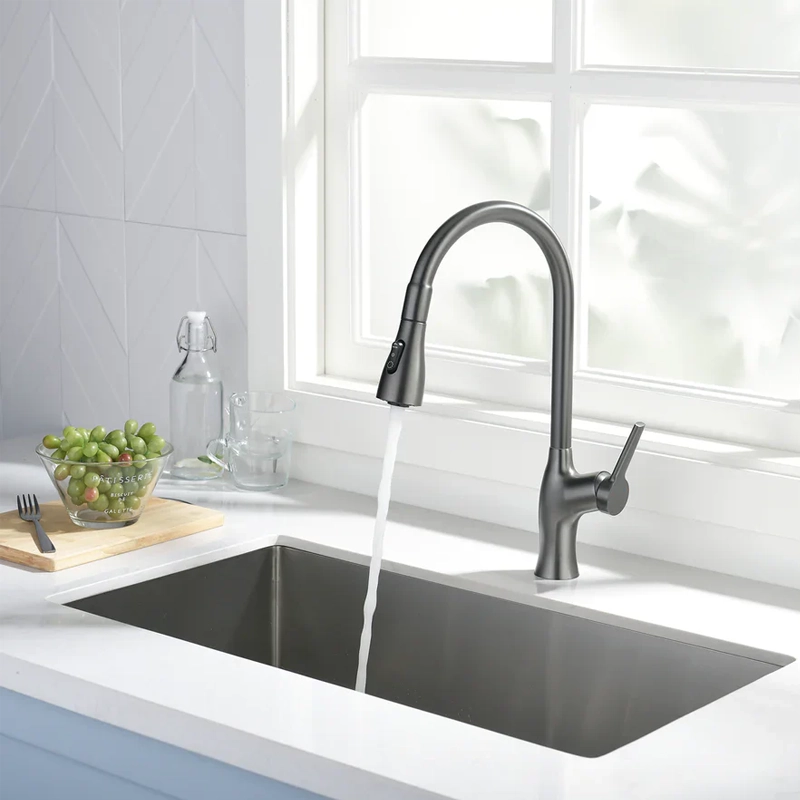
Surface finish is not just about appearance—it directly impacts durability and maintenance.
Electroplating (Nickel + Chrome)
Widely used for polished finishes. Requires strict layer control for corrosion resistance and adhesion.
PVD Coating
Ideal for premium finishes such as matte black or brushed brass kitchen tap designs. Offers superior scratch resistance and long-term color stability.
Brushed Finishes
Help conceal fingerprints and water spots, making them practical for residential and commercial use.
At Jekare, we ensure finish consistency across mixed materials—critical for maintaining uniform appearance in multi-component kitchen sink taps.
Lower-cost materials may reduce upfront pricing but increase warranty risks. Brass and stainless steel provide better long-term ROI.
High-traffic environments (hospitality, multi-family housing) require robust materials and ceramic cartridges.
Hard water and particulates can damage internal components. Design solutions include filtration compatibility and anti-scale aerators.
Polished finishes require more upkeep, while brushed and PVD finishes offer easier maintenance.
Recyclable materials like brass and stainless steel, along with water-saving aerators, are increasingly important for global markets.
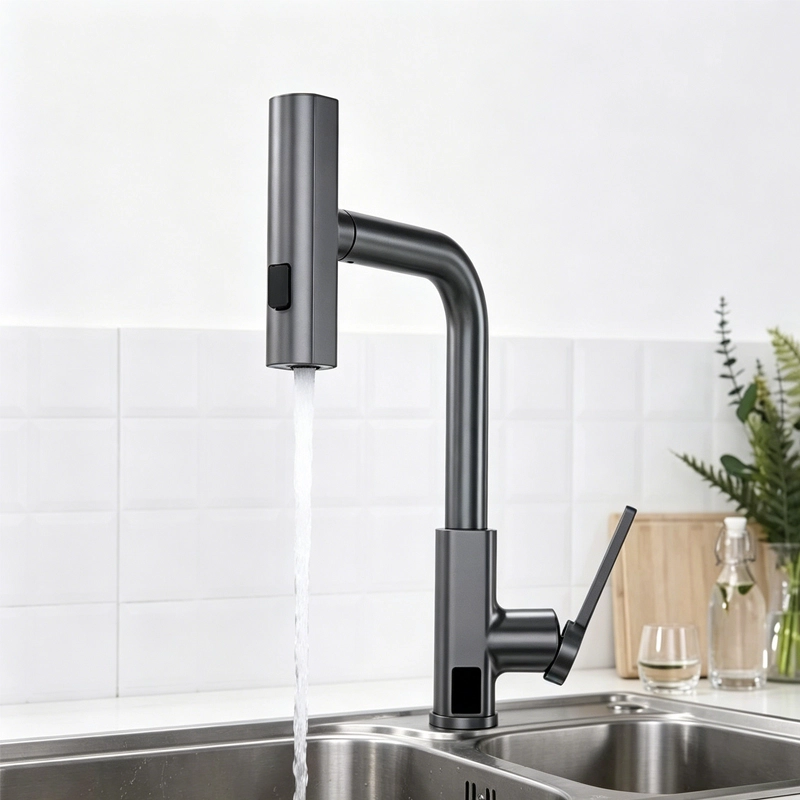
Even the best materials can fail if manufacturing processes are not controlled properly.
Key production steps include:
At Jekare, we integrate advanced equipment and strict quality control systems to ensure every kitchen faucet with sprayer meets consistent performance standards from prototype to mass production.
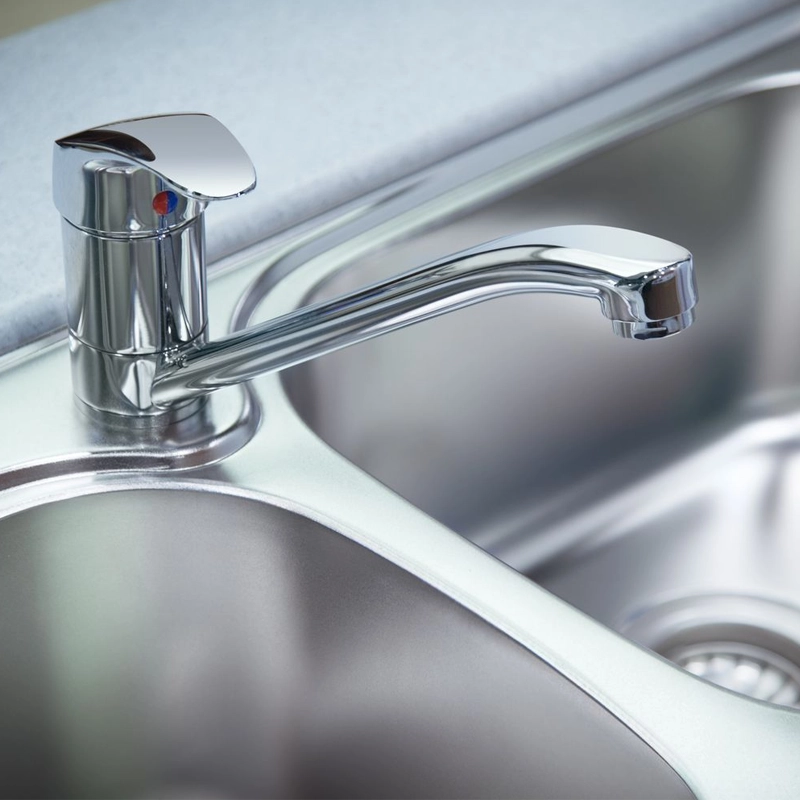
Understanding what a kitchen faucet is made of goes beyond material names—it requires evaluating how those materials are engineered, processed, and assembled into a reliable product. For brands and distributors, the right combination of materials and manufacturing processes leads to better performance, fewer service issues, and stronger market positioning.
Jekare supports customers through every stage of development, from material selection and prototyping to large-scale production. If you are planning your next kitchen sink taps project, what level of durability, finish quality, and user experience do you want to deliver?
Jekare recommends our Custom Kitchen Tap With Pull Out Spray, designed for both functionality and premium positioning. This kitchen faucet with sprayer offers flexible water control, improved cleaning efficiency, and ergonomic handling—making it ideal for modern kitchens.
Key advantages include:
From a B2B perspective, this product supports:
Our one-stop service ensures seamless development—from concept to shipment—helping you bring reliable, high-quality products to market.
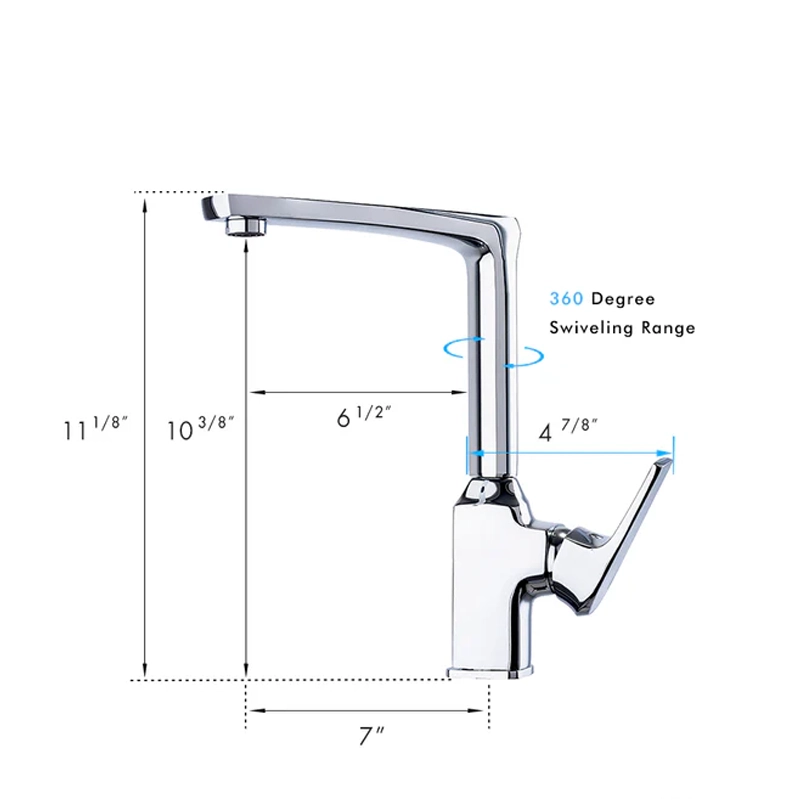
Brass and stainless steel are the most reliable choices for durability, corrosion resistance, and long-term performance.
Yes, when made with lead-free brass alloys that comply with international standards.
It improves flexibility, cleaning efficiency, and user convenience, especially in modern kitchens.
PVD finishes offer better scratch resistance and longevity, while plating is more cost-effective.
Yes. Jekare provides OEM/ODM services, including material selection, design, finish, and functional customization.