
In commercial bathroom projects, especially hotels in low-pressure regions, thermostatic system failures rarely appear during installation. They usually emerge after occupancy begins, when water demand becomes dynamic rather than theoretical.
This case is a composite engineering analysis based on multiple real low-pressure hotel scenarios, summarized into one representative failure pattern.
The project was a 12-floor hotel using centralized hot water supply with thermostatic shower systems installed in each room.
Design parameters assumed relatively stable conditions: cold water pressure around 0.25–0.35 MPa, hot water slightly higher but balanced within a narrow range, and flow rate expected to remain stable at around 7–9 L/min.
On paper, the selected thermostatic valves were fully compliant with commercial standards, with an operating range that should have covered the project requirements.
However, actual field conditions after partial occupancy were very different. Pressure on upper floors dropped significantly during peak usage, sometimes falling close to 0.12 MPa, while hot water pressure remained comparatively stable. Instead of a balanced system, the installation operated under constant hydraulic imbalance and fluctuation.
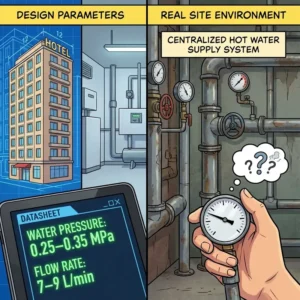
Once the hotel reached moderate occupancy, performance issues began to appear consistently, especially during morning and evening peak hours.
The most noticeable problem was unstable shower temperature. Guests reported sudden shifts between hot and cold water during use, not as a single failure event, but as repeated fluctuations throughout a single shower cycle.
At the same time, upper floors experienced noticeably weaker flow compared to lower floors. In some cases, flow reduction reached levels where the shower still functioned but no longer delivered a comfortable user experience.
Another subtle but important issue was delayed response. Adjustments at the mixing valve did not immediately reflect at the outlet, creating a lag effect where temperature overshot before stabilizing.
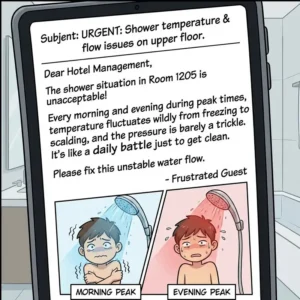
After system inspection and hydraulic testing, it became clear that the issue was not related to product defect but system mismatch.
The key problem was pressure imbalance combined with dynamic fluctuation. Cold water supply was unstable during peak demand, while hot water remained relatively constant. This imbalance forced the thermostatic cartridge to continuously correct itself, but always with delay due to its mechanical response time.
On upper floors, cumulative pressure loss through vertical piping further reduced available inlet pressure. As a result, the cartridge was operating near its minimum functional threshold, where even small fluctuations caused disproportionate changes in output temperature and flow.
In addition, long-term exposure to mineral content in water led to partial scaling inside the cartridge housing, increasing internal friction and further slowing response speed.
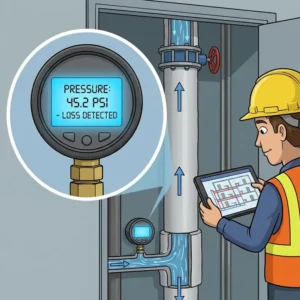
Although the system used well-known commercial-grade thermostatic valves, performance still degraded under real conditions.
The fundamental issue was that the system was operating outside the stable design envelope of the cartridge. These products are typically optimized for relatively balanced pressure conditions and controlled dynamic variation.
In this case, however, the system combined three challenging conditions at the same time: unstable inlet pressure, vertical distribution loss, and rapid demand fluctuation. When these factors overlapped, even high-quality components could not maintain stable performance.
The solution required changes at both system and component levels rather than simple replacement.
Hydraulic balancing measures were introduced to stabilize pressure distribution across floors, and flow conditions were re-evaluated based on actual usage rather than design assumptions. In parallel, thermostatic components were adjusted to better respond to low-pressure environments, and anti-scale measures were added upstream to reduce long-term performance degradation.
The key shift was moving away from treating the issue as a product selection problem, and instead addressing it as a system design problem.
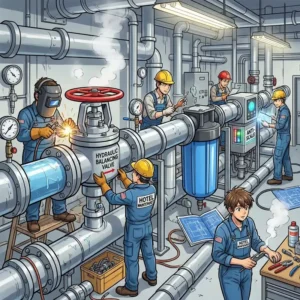
At Jekare, we often see similar challenges in OEM and commercial bathroom projects, especially in regions with unstable municipal water supply or multi-floor pressure loss.
Instead of relying solely on standard cartridge specifications, we evaluate real operating conditions such as pressure variation curves, vertical distribution losses, usage intensity, and water quality characteristics before defining the system design.
Based on these parameters, we adjust thermostatic response behavior, flow control characteristics, and cartridge structure to ensure stable performance under real-world conditions rather than laboratory assumptions.
Low water pressure is not just a supply limitation—it is a system design variable that directly affects thermostatic performance.
This case highlights a key engineering reality: most shower system failures are not caused by defective products, but by mismatches between system design assumptions and real operating conditions.
In modern bathroom engineering, reliability depends less on brand selection and more on whether the system is designed to match its environment.
Q: Why do thermostatic showers fail in hotels?
A: Because of unstable water pressure and real usage conditions different from design assumptions.
Q: Why is my thermostatic shower temperature unstable?
A: It is usually caused by pressure imbalance between hot and cold water supply.
Q: Why does shower temperature change during use?
A: Rapid pressure fluctuations force the valve to constantly adjust output temperature.
Q: Can water pressure imbalance affect shower performance?
A: Yes, it directly impacts temperature stability and flow consistency.
Q: What is the main cause of thermostatic system failure in buildings?
A: A mismatch between design assumptions and real-world water usage patterns.