
If you’ve ever turned on your faucet and noticed a mysterious black, slimy strand—or even worse, blotches of black slime floating in your water—you’re not alone. It’s gross, it’s alarming, and the first thing you probably think is: “Am I drinking toxic sludge?” Spoiler alert: in most cases, it’s more unsightly than unsafe. But let’s dive deep and get the real facts, with a little humor to make your faucet nightmares a little less terrifying.
The black gunk you’re seeing is usually a classic triple threat: minerals + bacteria + your plumbing system. Here’s the breakdown:
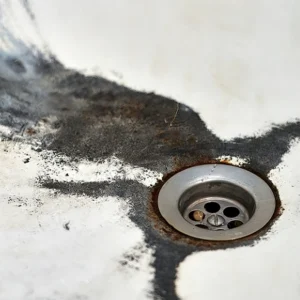
Anywhere water hangs out, you’re at risk:
Basically, if it touches water and sits long enough, it’s fair game for slime.
Here’s the good news: in most cases, no. Let’s break down the risks:
| Source | Risk Level | Notes |
| Iron & Manganese | Low-Medium | Mostly aesthetic issues; may taste or look bad |
| Manganese bacteria | Low | Non-pathogenic, not harmful |
| Rubber particles | Low | Harmless, signals material aging |
| Mineral deposits | Medium | Can harbor bacteria, cause clogs |
| Corroded pipes | High ⚠️ | Can release lead, copper, iron; needs attention |
Key takeaway: Black slime is usually a cosmetic nuisance, not a health hazard—unless you have old corroded pipes.
Sometimes it’s not constant—one day your water’s crystal clear, the next it looks like a chocolate milkshake. Here’s why:
Here’s a simple diagnostic logic:
Start by testing your water—it’s essential. Check for manganese, iron, bacteria, and heavy metals (especially lead in older pipes). Accurate testing tells you exactly what problem you’re dealing with.
Treat based on your results. Minerals & biofilm → filtration, chlorination, or UV. Bacteria & mold → chlorine or UV sterilization. Old rubber parts → replace washers, gaskets, hoses. Corroded pipes → replace with modern materials; add an acid neutralizer if needed.
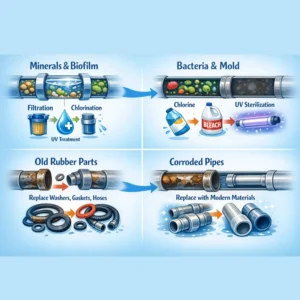
Keep slime away with a whole-home filtration system, annual water tests, regular aerator/showerhead cleaning, maintaining treatment systems, and avoiding stagnant water. Prevention is easier than repair.
Black slime in faucets is mostly a visual and sensory nuisance, not a health threat. Iron and manganese are safe at normal concentrations, and the bacteria forming the biofilm are non-pathogenic.
The U.S. Environmental Protection Agency (EPA) recommends keeping manganese levels in drinking water at 0.05 ppm or below. At the concentrations typically found in household water, neither manganese itself nor manganese-related bacteria pose a health risk. Humans are primarily exposed to manganese through water and food, and at these levels, it does not negatively impact health. In fact, manganese is an essential nutrient necessary for normal bodily functions. While there is some evidence that inhaling very high concentrations of manganese over long periods may affect the nervous system, such exposure is extremely rare and is not associated with drinking tap water.
The presence of minerals like iron and manganese in your water can lead to oxidized particles that form sticky, sometimes smelly biofilms. This biofilm can build up in faucets, drains, and water heaters, affecting the efficiency and cleanliness of your plumbing. Meanwhile, aging plumbing materials, like rubber washers and corroded pipes, may release additional contaminants, including rust and potentially harmful metals like lead.
At Jekare, we understand the importance of addressing these issues proactively. Our advanced plumbing solutions are designed to reduce mineral buildup, prevent biofilm formation, and enhance the durability of water systems. With Jekare, you can ensure a cleaner, safer water experience, free from the complications of aging plumbing and mineral deposits.
Q1: Is black slime dangerous to drink?
A: Usually not. At typical household water levels, iron, manganese, and related bacteria are non-pathogenic. Only old, corroded pipes (especially with lead solder) can pose health risks.
Q2: What is the black slime in my faucet?
A: It’s mainly oxidized minerals (iron and manganese) and non-pathogenic bacteria forming a sticky biofilm. Rubber washers or pipe corrosion may contribute tiny black particles too.
Q3: Where does black slime usually appear?
A: Anywhere water sits: faucet aerators, showerheads, toilet tanks, water heaters, kettles, or drains. Basically, if water lingers, slime can grow.
Q4: Why does black slime suddenly appear if my water was clear before?
A: Common triggers: sediment dislodgement from pressure changes, water treatment adjustments (e.g., Poly Orthophosphate), or dormant pipes that haven’t been used in a while.