
Our factory approach even simple bathroom components like toilet seats from a professional manufacturing perspective. A proper toilet seat replacement is not just a basic maintenance task—it reflects product compatibility, dimensional accuracy, material quality, and installation reliability. For brands, distributors, and project buyers, understanding this process helps ensure better product selection, fewer installation issues, and improved end-user satisfaction.
Whether the application involves a standard plastic toilet seat, an upgraded toilet seat bidet, or a specialized portable toilet seat, correct sizing and installation are essential to performance and durability.
Toilet seats experience constant daily use, exposure to moisture, cleaning chemicals, and mechanical stress. Over time, this leads to wear such as loosening hinges, surface scratches, discoloration, and reduced structural stability.
From a manufacturing standpoint, replacement is necessary when:
For B2B buyers, frequent replacement requests may also indicate issues in material selection, hinge design, or supplier quality consistency.
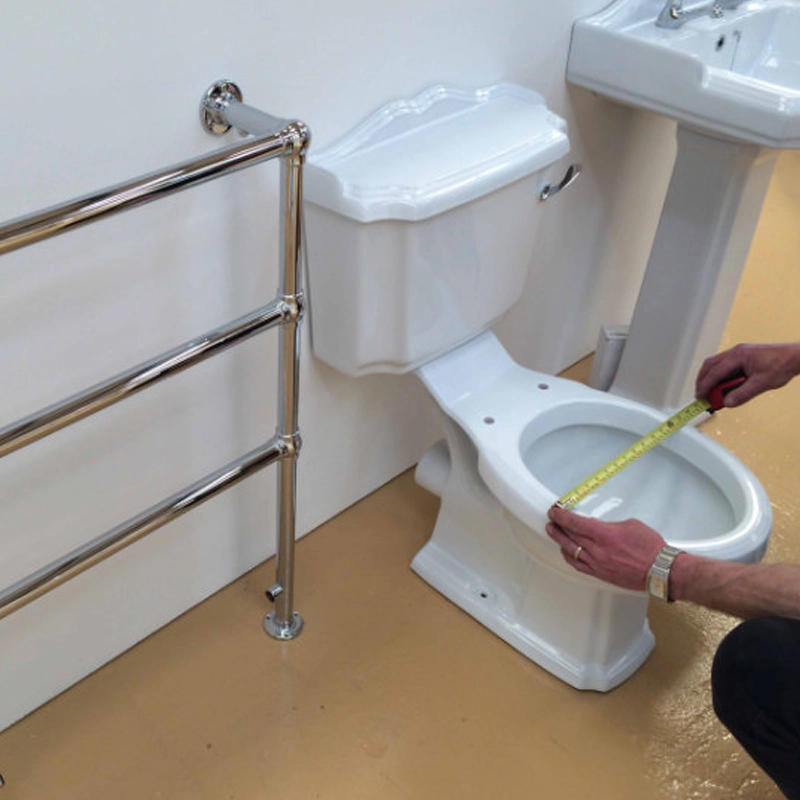
Accurate measurement is the foundation of a successful toilet seat replacement. Most installation problems come from incorrect sizing rather than product defects.
Measure from the center of the mounting holes to the front edge of the bowl. This determines whether the seat is round or elongated.
Measure the widest point of the bowl to ensure proper side coverage and comfort.
Standard spacing is typically 5.5 inches (140 mm), but variations exist in certain markets and custom designs.
Common shapes include round, elongated, and specialty contours. Matching shape is critical for both function and visual alignment.
For manufacturers like Jekare, maintaining strict dimensional tolerances ensures compatibility across different toilet brands and markets.
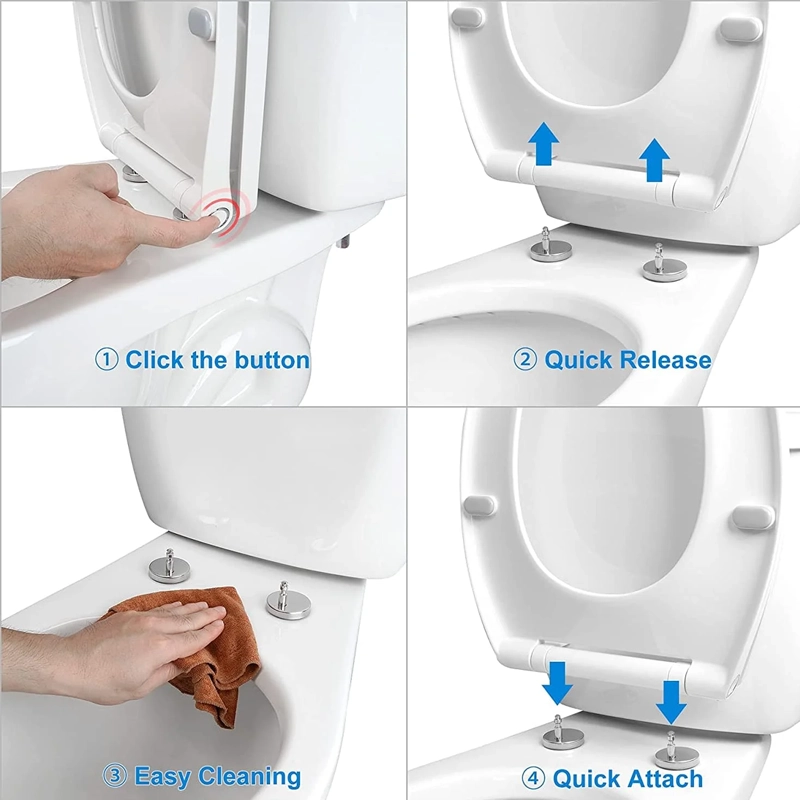
Most installations require only basic tools such as a screwdriver and adjustable wrench. However, for commercial or large-scale installations, standardized tool compatibility is important.
In high-quality manufacturing, all mounting components should be included and pre-matched to avoid installation inconsistencies.
Confirm all dimensions before installation. This step ensures the new product fits properly and avoids rework.
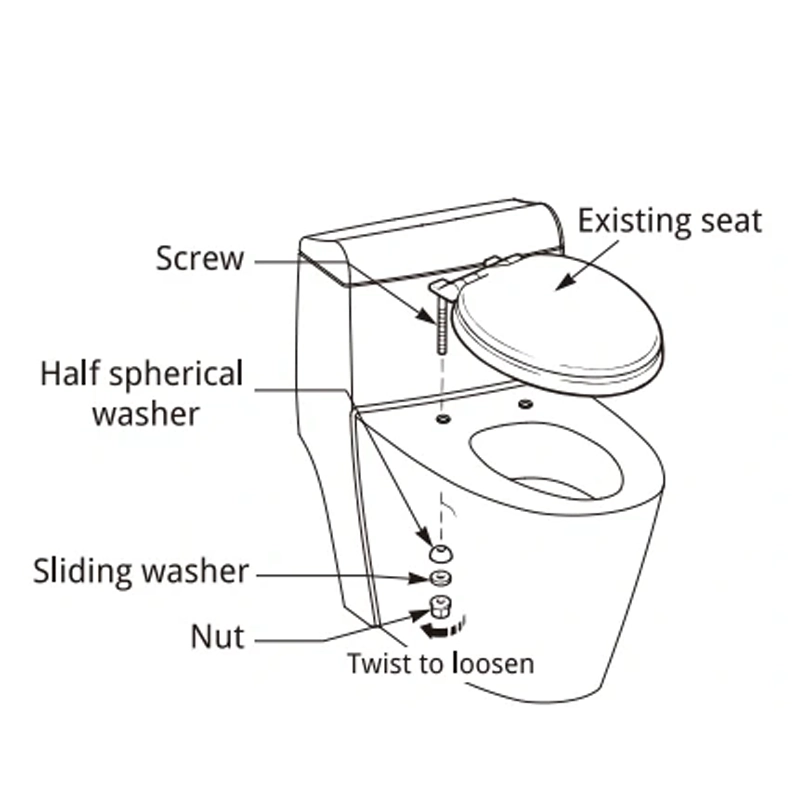
Loosen the bolts under the toilet rim and remove the existing seat. For older units, corrosion or plastic deformation may require additional care.
Clean the mounting surface thoroughly. This improves hygiene and ensures stable contact for the new seat.
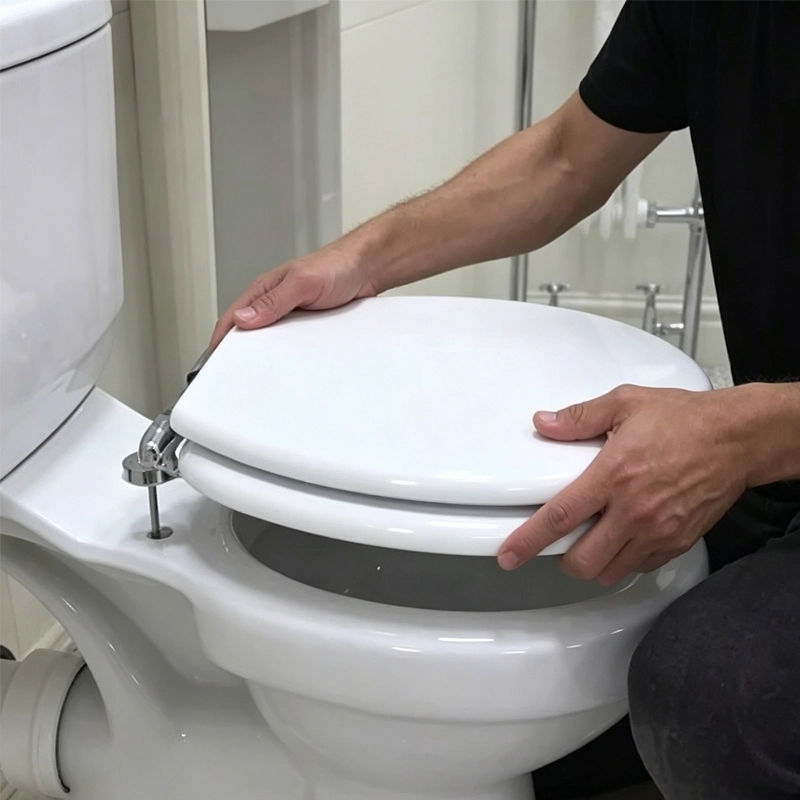
Align the hinges with the mounting holes and insert the bolts. Tighten evenly to avoid misalignment.
Check for movement, alignment, and lid operation. A properly installed seat should remain stable during use without shifting.
Old plastic or metal bolts may corrode or seize. In such cases, controlled cutting or specialized tools may be required. From a product design perspective, corrosion-resistant materials help prevent this issue.
Non-standard bowls require customized seat solutions. This is where working with a professional manufacturer becomes essential, especially for OEM or project-based requirements.
Proper maintenance extends product life and reduces replacement frequency.
For commercial buyers, maintenance cycles should be part of facility management planning.
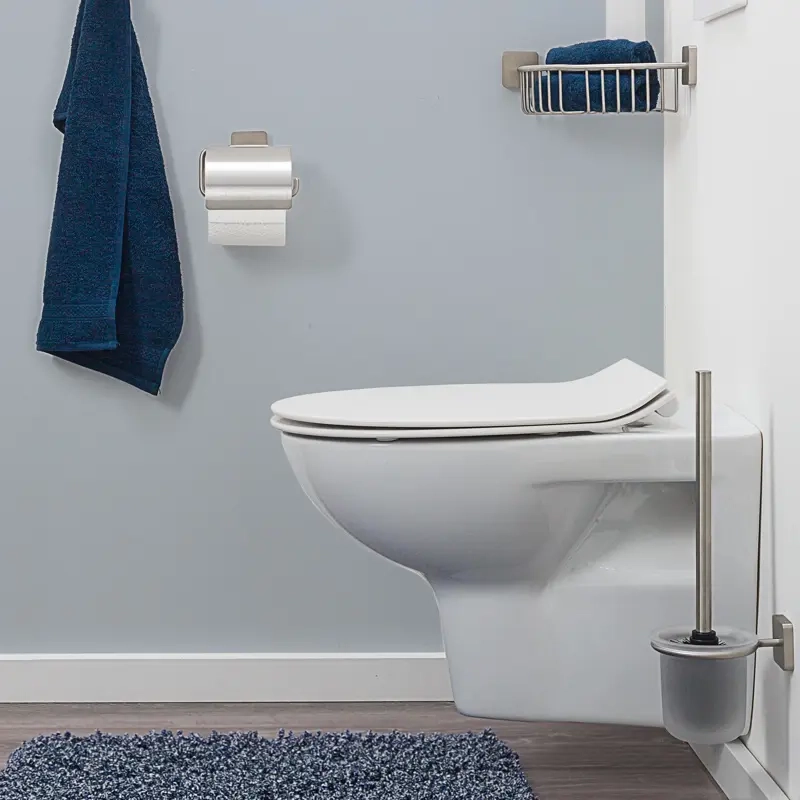
Common materials include thermoplastic and thermoset options. A plastic toilet seat is widely used due to its cost efficiency, durability, and ease of cleaning. Premium models may include reinforced structures or soft-close mechanisms.
For specialized applications, a portable toilet seat may be required for travel, healthcare, or temporary installations.
At Jekare, we provide more than standard products. We offer manufacturing solutions tailored to your market needs.
As a professional bathroom fixture manufacturer, we focus on delivering products that install easily, perform reliably, and meet global quality expectations.
In conclusion, replacing a toilet seat is more than a routine maintenance task—it is an opportunity to upgrade hygiene, comfort, and long-term performance. Choosing a high-quality toilet seat can help reduce bacterial buildup, support better sanitation standards, and improve user comfort through stable structure and ergonomic design. With the right materials and precision manufacturing, issues such as loosening, misalignment, and premature wear can be effectively minimized.
At Jekare, we support these outcomes through strong manufacturing capabilities, including advanced plastic injection molding, clean room production environments, and strict quality control processes. We also offer customized material options and functional designs to meet different market needs, from standard applications to specialized solutions. If you are looking to enhance your product line with durable, hygienic, and precisely engineered toilet seats, we welcome you to contact us to discuss your project requirements.
Measure the bowl length, width, and hole spacing, and match the shape precisely.
Yes, as long as the bowl dimensions are standard and structurally sound.
Most follow standard dimensions, but variations exist, especially for specialty designs.
Typically every few years, depending on usage, material quality, and maintenance.