
Faucet valves are one of the most critical components in any water control system. Although they are usually hidden inside the faucet body, they directly determine flow stability, sealing performance, service life, and user safety. In real engineering applications, valve selection is not simply a matter of preference but a decision based on pressure conditions, system compatibility, and long-term reliability requirements.
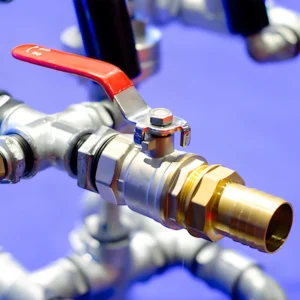
Different valve types are designed for different operating conditions. Ceramic disc valves typically use alumina or zirconia discs and operate under medium pressure systems with a long service life of over 500,000 cycles. They usually support a 90-degree quarter-turn operation, making them the standard choice for most modern residential faucets.
Ball valves, by comparison, use a stainless steel or brass ball structure and are capable of handling much higher pressure ranges, often up to 6.4 MPa. They are designed for high-flow applications rather than precise regulation. Compression valves rely on rubber or neoprene washers and are generally used in low-pressure environments with significantly shorter lifespans. Cartridge valves integrate sealing and flow control into a modular structure and are widely used in mid to high-end faucet systems due to their stable performance and ease of replacement. Thermostatic valves are designed for automatic temperature regulation using wax or electronic sensors, while pressure balance valves rely on diaphragm or piston systems to stabilize hot and cold water pressure fluctuations.
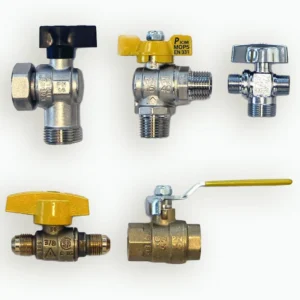
Each valve type controls water flow using a different mechanical principle. Ceramic disc valves rely on two precision-ground ceramic surfaces that rotate against each other to open or close the water path, achieving sealing without direct wear in the closed position. Ball valves control flow through the alignment of a hollow rotating sphere, while PTFE seats ensure sealing performance.
Compression valves use a screw-driven stem to press a rubber washer against a valve seat to physically block water flow. Cartridge valves combine multiple sealing elements inside a compact cylinder, allowing either rotational or linear control of water mixing and flow. Thermostatic valves respond to temperature changes by expanding or contracting internal sensing elements to automatically adjust hot and cold water ratios. Pressure balance valves react to pressure differences in real time and adjust internal flow distribution to maintain a stable output ratio between hot and cold water.
From a performance perspective, ceramic disc valves are widely used because of their drip-free sealing capability, low operating torque, and strong resistance to scaling. Ball valves are preferred in high-flow environments due to their fast switching speed and excellent pressure resistance. Compression valves remain popular in low-cost applications because of their simple structure and easy maintenance.
Cartridge valves are valued for their precise flow control and stable long-term performance, while thermostatic valves are recognized for providing constant water temperature and preventing scalding risks. Pressure balance valves are mainly used to stabilize flow under fluctuating pressure conditions and improve overall user comfort in unstable plumbing systems.
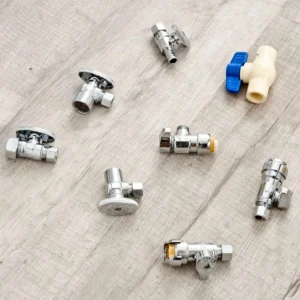
Despite their advantages, each valve type also has inherent limitations that must be considered during system design. Ceramic disc valves, while durable, can be brittle under extreme pressure or sudden thermal shock. Ball valves are not suitable for precise flow adjustment and may suffer from seat wear when used in partially open conditions.
Compression valves have relatively short service lives and are not suitable for high-temperature or high-pressure environments. Cartridge valves require high manufacturing precision and may be more expensive to replace. Thermostatic valves can be sensitive to water quality and may experience slower response times in systems with heavy scaling. Pressure balance valves, while effective at stabilizing pressure, cannot independently control temperature and are limited in dynamic flow adjustment.
Valve compatibility depends heavily on pipeline materials, interface standards, and installation orientation. Ceramic disc valves and cartridge valves are generally compatible with copper and PPR piping systems and support standard G1/2 or G3/4 interfaces. Ball valves are widely compatible with both metal and plastic pipelines and are available in full-port or reduced-port configurations depending on flow requirements.
Compression valves are typically used in older iron or copper piping systems and require simple vertical installation. Thermostatic valves must be installed with correct hot and cold orientation, usually hot on the left and cold on the right, and are best suited for copper or PPR systems. Pressure balance valves require the use of filters to prevent debris from affecting diaphragm performance and are commonly installed in mixed water supply systems.
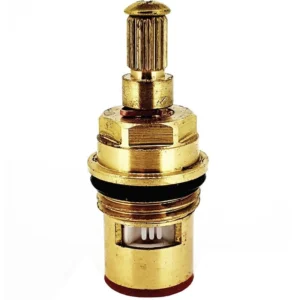
Maintenance requirements vary significantly between valve types. Ceramic disc valves generally require only occasional descaling and may experience leakage if the ceramic surface is damaged or if internal components become stuck. Ball valves need periodic lubrication of sealing seats, and common issues include leakage or increased operating resistance due to debris accumulation.
Compression valves require frequent washer replacement due to natural wear, while cartridge valves are typically maintained by replacing the entire cartridge when performance degrades. Thermostatic valves require regular filter cleaning to maintain accurate temperature control, and deviations in temperature are often caused by scaling or sensor issues. Pressure balance valves require diaphragm inspection and filter cleaning, as flow reduction or temperature instability is usually caused by clogging or material fatigue.
In real-world applications, ceramic disc valves are most commonly used in residential kitchens, bathroom faucets, and basin mixers due to their balance of durability and cost. Ball valves are widely applied in industrial systems, outdoor pipelines, and irrigation systems where high flow capacity is required rather than precise control.
Compression valves are generally limited to vintage systems, low-pressure environments, or budget-driven projects. Cartridge valves are commonly used in high-end faucets, shower systems, and commercial installations where stable performance is required. Thermostatic valves are essential in environments such as hotels, hospitals, and childcare facilities where temperature safety is critical. Pressure balance valves are typically used in public buildings, gyms, and residential complexes where water pressure is unstable.
Faucet valves must comply with different international standards depending on the target market. Ceramic disc valves commonly follow ISO and NSF standards for durability and safety. Ball valves are often designed according to ANSI and CE requirements for industrial compatibility. Compression valves may follow regional standards such as EN or WRAS depending on installation regions.
Cartridge valves are generally tested under ASME and NSF standards for performance stability. Thermostatic valves must meet strict safety standards such as EN 1111 and ASSE requirements to ensure anti-scalding performance. Pressure balance valves are also regulated under ASSE and EN standards to ensure consistent pressure response in plumbing systems.
Faucet valve selection is fundamentally an engineering decision based on system conditions rather than product preference. Each valve type serves a specific functional role within water control systems, and incorrect selection often leads to performance instability, reduced lifespan, or safety risks.
In practical engineering design, ceramic disc and cartridge valves dominate residential applications due to their balance of performance and cost. Thermostatic valves are increasingly becoming mandatory in safety-critical environments, while ball valves remain essential in industrial flow systems. Pressure balance valves serve as stabilizing components in unstable water supply conditions, and compression valves are gradually being phased out in modern plumbing systems.
A correct valve selection is not about choosing the most advanced technology, but about ensuring the right match between system conditions, safety requirements, and long-term operational stability.
As a professional manufacturer, Jekare focuses on providing reliable faucet valve solutions for different application scenarios, supporting OEM and engineering customers with stable quality, consistent performance, and application-based product selection support.
The most common faucet valve is the ceramic disc valve. It is widely used in modern homes because it is durable, stable, and low maintenance.
Ceramic disc valves and cartridge valves are generally the most durable for residential use, offering long service life and stable performance.
A ceramic valve uses rotating ceramic discs to control water flow, while a cartridge valve uses an internal module to manage flow and mixing more precisely.
Cartridge valves and thermostatic valves are best for hot and cold water control. Thermostatic valves also keep the temperature constant automatically.
A thermostatic valve is used to keep water temperature stable and prevent sudden hot or cold changes. It is commonly used in showers and hotels.
Faucet valves usually fail due to water scale, pressure changes, or worn internal parts such as seals, washers, or ceramic discs.