
Call us: +86-18965139230 | Mail to us: info@jekare.com
Blog EN

how do frost free faucets work

Why Frost Free Outdoor Faucets Are Essential

Outdoor faucets (spigots, hose bibs, or sillcocks) are critical to any commercial or residential water system. While heavily used in summer, they face the harshest test during winter. Traditional outdoor faucets are prone to freezing when temperatures drop below 32°F (0°C), which can cause pipe bursts, wall leaks, and costly water damage. Frostfree faucets, engineered with extended stems and internal shut-off valves, eliminate freezing at its source, providing a reliable winter solution for cold climates.
Understanding Key Terms

  1. Faucet vs. Spigot vs. Tap:In the U.S., indoor valves are “faucets,” while outdoor valves are “spigots,” “hose bibs,” or “sillcocks.” In other English-speaking countries, indoor valves are “taps,” and outdoor valves may be called “plugs,” “pipes,” or “hose bibs.” These devices control water flow between the household system and external points.
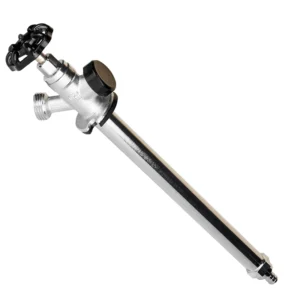
  2. FrostFree Faucet: Designed for sub-zero environments, these faucets feature a long stem, an internal shut-off valve, and a self-draining design. Known as frost-proof hose bibs or frost-free outdoor taps, they are an evolution of the compression-style faucet optimized for freeze prevention.

How Frost Free Faucets Work

The principle is simple: no standing water, no freezing. Key design features include:
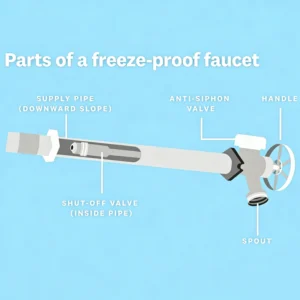
  1. Extended Supply Pipe: The faucet’s stem extends at least 4 inches into the warm interior, keeping the shut-off valve and water supply above the frost line.
  2. Internal Shut-Off Valve: Located inside, this prevents freezing by keeping the valve and rear piping in a temperature-controlled environment.
  3. Self-Draining Spout: The exterior portion of the faucet slopes slightly downward, allowing residual water to drain naturally when closed.
  4. Anti-Siphon and Air Gap Protection: Some commercial-grade models include anti-siphon valves or air gaps to prevent backflow and protect water quality.

Key Components & Their Roles

  1. Spout & Handle: Positioned for easy access and efficient drainage. Ergonomic handles ensure precise operation.
  2. Supply Pipe: Acts as a bridge between indoor plumbing and the exterior, with proper slope to guarantee full drainage.
  3. Stem Washer / Compression Washer: Provides precise shut-off, pressure buffering, and prolongs the faucet’s lifespan.
  4. Anti-Siphon Valve / Air Gap: Prevents contaminated water from backflowing into the supply, meeting strict plumbing codes in North America and Europe.

Frost-Free vs. Traditional Outdoor Faucets

Feature

FrostFree Faucet

Traditional Faucet

Valve Location

Indoor warm space

Outdoor exposed area

Pipe Design

Extended supply pipe, downward slope

Short, flat pipe

Drainage

Automatic self-draining

Manual, often incomplete

Freeze Protection

Stable in -30°F environments

Prone to freezing below 32°F

Winter Maintenance

Minimal; no insulation required

Labor-intensive; must drain & insulate

Lifespan

10–15 years

5–8 years

Risk

Low, requires periodic inspection

High; can cause pipe bursts and water damage

Frost-free faucets provide a clear ROI: they reduce maintenance, prevent water damage, and remain operational year-round, unlike traditional faucets that often require seasonal shutdown.

Professional Installation & Maintenance

  1. Installation Best Practices: Certified plumbers ensure the supply pipe extends into the interior, the slope is correct (3°–5°), and all seals are tight.
  2. Routine Maintenance (Monthly/Quarterly): Inspect joints, handles, and spouts; lubricate stem and handle; check drainage and seals; replace washers every 1–2 years.
  3. Seasonal & Extreme Cold Measures: Disconnect hoses in fall, verify seals, and, in extreme cold regions (-30°F), add interior pipe insulation or exterior faucet covers.

Common Issues & Solutions

  1. Leaking Spout: Usually worn stem washer or loose fittings → replace washers, tighten connections.
  2. Residual Water After Closing: Often caused by clog or improper slope → clean spout/filter and verify installation angle.
  3. Stiff Handle: Due to lack of lubrication or debris → clean stem, apply silicone lubricant.
  4. Backflow Concerns: Missing or failed anti-siphon valve → inspect and replace as needed.

Conclusion

Frost-free faucets combine internal valves, extended stems, and self-draining design to eliminate the winter freeze risk inherent in traditional outdoor faucets. For commercial properties and cold-climate residences, they offer reliable water access, long-term savings, and water system protection, making them an essential investment.

For buyers seeking higher-quality and scalable supply solutions, Jekare offers a reliable choice, delivering durable faucet products and strong support for large-scale wholesale procurement.

With proper installation and routine maintenance, these faucets can reliably perform for 10+ years, providing peace of mind and operational efficiency throughout the year.

FAQ

What’s the difference between frost-free and standard faucets?
Frost-free faucets keep the shut-off valve indoors, preventing freezing. Standard faucets retain water outside and are more prone to freeze damage.

Do frost-free faucets fully prevent freezing?
They greatly reduce the risk, but proper installation and disconnecting hoses in winter are still required.

How long do frost-free faucets last?
Typically 10–15 years with proper installation and maintenance.

How to choose a faucet supplier for bulk orders? 
Focus on durability, certifications, consistent quality, and the ability to support large-volume supply.

What are the common problems with freeze-proof faucets?
Freeze-proof faucets can leak or stop working if not properly installed, insulated, or drained. Extreme cold can cause freezing, and issues like faulty valves or clogged pipes may also occur.

Request A Call Back

Ever find yourself staring at your computer screen a good consulting slogan to come to mind? oftentimes.