
Sourcing decisions for kitchen fixtures are rarely just about appearance—they’re about origin transparency, manufacturing capability, and long-term product performance. If you’ve ever asked whether kitchen faucets are truly made in the United States, you’re not alone. For specifiers, distributors, and brand owners, understanding what “Made in America” actually means is essential before committing to a supplier or launching a product line.
Working closely with global partners, Jekare provides OEM and custom manufacturing solutions that help brands balance cost, compliance, and performance. So let’s break this topic down in a way that’s actually useful for procurement and product development.
In the faucet industry, “Made in America” is not always straightforward. There are generally three production models:
For buyers sourcing kitchen faucet with sprayer systems or premium kitchen mixer tap lines, the distinction matters. Regulatory compliance, lead times, and cost structures can vary significantly depending on the model.
Moen operates manufacturing and R&D facilities in North America but also uses global production. It represents a hybrid model where some SKUs are domestically produced while others are internationally sourced.

Delta maintains large U.S. plants and produces many qualifying “Made in USA” SKUs. For buyers specifying delta kitchen faucets, it’s critical to verify SKU-level origin rather than relying on brand reputation alone.

A true domestic manufacturer, Waterstone designs and produces its faucets entirely in California. This makes it a strong option for premium projects requiring verified U.S. manufacturing.

Kohler combines domestic and global production. Some models are manufactured in U.S. facilities, while others rely on international sourcing.
A globally recognized European brand, Grohe manufactures primarily outside the U.S. While grohe kitchen faucet products are known for engineering quality, they are not typically U.S.-made.
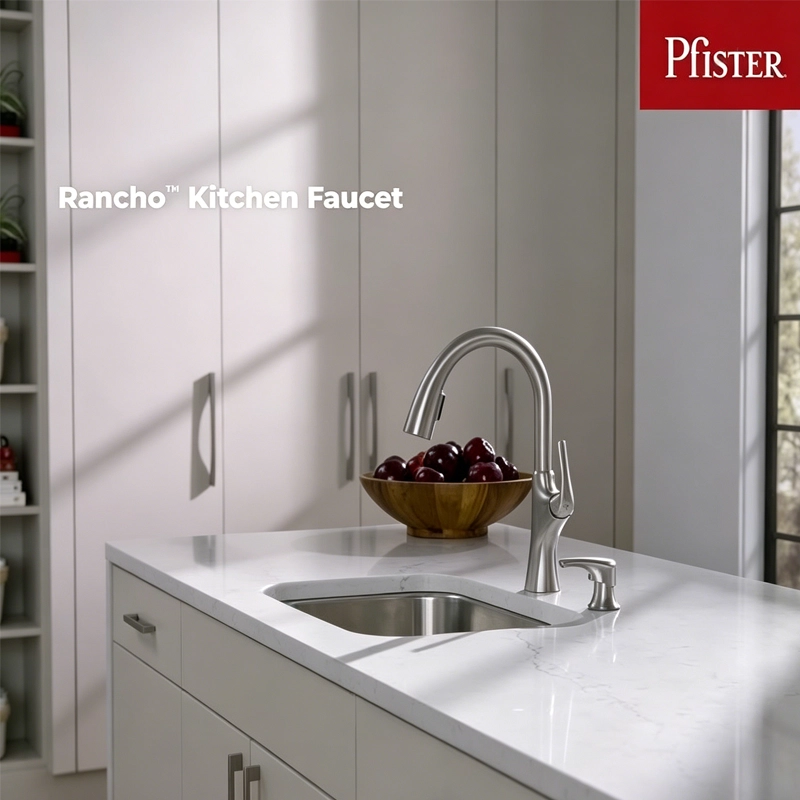
An American-origin brand now operating globally. Like many competitors, production is split between domestic and overseas facilities.
Yes—but with limitations.
Certain brands and product lines are genuinely manufactured in the U.S., especially in the premium segment. However, the majority of the market relies on hybrid or global manufacturing models to remain competitive.
For B2B buyers, the takeaway is simple:
Always verify at the SKU level.
When origin matters, ask for:
This applies whether you’re sourcing a brushed brass kitchen tap or a full product line.
While domestic manufacturing has advantages, global OEM partners play a critical role in modern supply chains.
Jekare supports brands by offering:
Many U.S. brands today rely on a hybrid model—combining domestic assembly with overseas component manufacturing—to balance cost and quality. This is where a reliable factory partner becomes essential.
Jekare offers a full-service manufacturing approach designed for modern brands:

For brands targeting premium markets, we recommend our Satin Brass Hot and Cold Kitchen Faucet:
Key Advantages:
This model is ideal for mid-to-high-end retail programs, hospitality projects, and private-label collections.
The question “Are kitchen faucets made in America?” doesn’t have a simple yes-or-no answer. The reality is a mix of domestic, hybrid, and global manufacturing models.
For B2B buyers, success comes from understanding the supply chain, verifying product origin, and choosing the right manufacturing partner. Whether your priority is domestic sourcing, cost efficiency, or custom product development, aligning with the right factory makes all the difference.
Jekare is here to support that process—from concept design to scalable production.
So, what matters most for your next project: origin, price, or performance? Let’s talk and build the right solution together.
No. Some Delta SKUs are produced domestically, but others are manufactured overseas. Always verify at the product level.
Generally no. Grohe products are primarily manufactured in Europe and other international facilities.
Not necessarily. Quality depends on manufacturing standards, materials, and testing—not just location.
It improves functionality by providing flexible cleaning, better reach, and enhanced water control.
Consider your priorities: compliance, cost, lead time, and customization requirements.