
At first glance, shower hoses seem like one of the simplest components in a bathroom system. Two connectors, a flexible tube, and water goes in one end and out the other. Easy, right?
Well—not quite.
If you’ve ever dealt with cross-border sourcing, product development, or even just a stubborn leak during installation, you already know that shower hose fittings are a lot more nuanced than they appear. While most hoses are built around a common size, true compatibility depends on a combination of thread standards, sealing design, hose structure, and even internal pressure behavior.
So yes, most shower hose fittings look the same. But whether they perform the same is a different story.
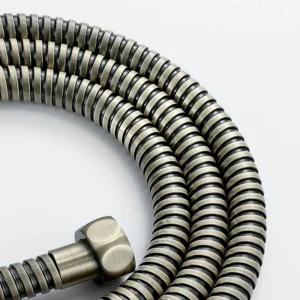
Most shower hoses globally use a ½-inch connection, typically referred to as G 1/2″ (BSPP). This is the default standard for handheld shower systems across Europe, Asia, and most export markets. It’s a parallel thread, designed to work with a sealing washer rather than relying on the thread itself to prevent leaks.
That’s why, in many cases, replacing a shower hose is as simple as unscrewing the old one and installing a new one. The interface is standardized, and the system is designed to be user-friendly.
But here’s the catch: “½-inch” is a nominal size, not a guarantee of compatibility.
The biggest technical trap lies in assuming that all ½-inch threads behave the same. They don’t.
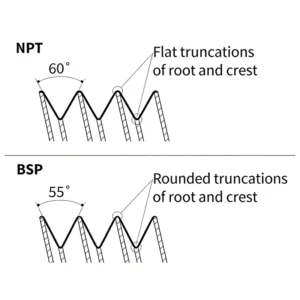
The two dominant standards—BSP (G 1/2″) and NPT (1/2″)—differ in both thread angle and sealing logic. BSP uses a 55° parallel thread with sealing achieved via a washer. NPT uses a 60° tapered thread that seals through mechanical interference.
From a mechanical standpoint, this changes everything. BSP connections depend on axial compression of a gasket, while NPT connections rely on radial pressure between threads. Mixing the two doesn’t just create a poor seal—it fundamentally breaks the sealing mechanism.
That’s why a connection might feel “almost right” during installation, but still leak under pressure.
Here’s where things get more interesting—and often overlooked.
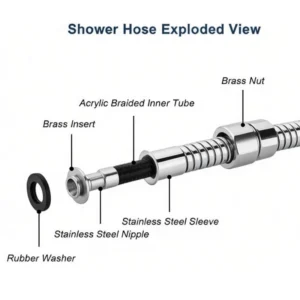
A shower hose isn’t just a tube. It’s typically a multi-layer structure, and that structure affects both compatibility and performance:
Now, why does this matter for fittings?
Because the way the hose connects to the fitting must account for:
A poorly designed connection may fit perfectly—but fail over time due to stress concentration at the joint.
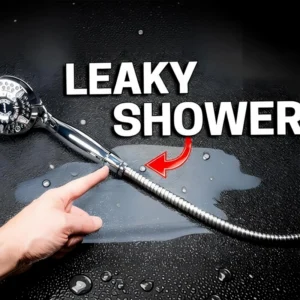
In real-world usage, leaks rarely come from the hose body. They almost always occur at the connection interface.
For BSP-based shower hoses, sealing is achieved through a flat washer seated inside the nut. This washer compresses against the mating surface when tightened. If the washer is missing, aged, or misaligned, leakage is inevitable—no matter how tight the connection is.
In NPT-based systems, sealing depends on thread engagement and sealant. Without proper PTFE tape or correct torque, micro-gaps remain, allowing water to escape under pressure.
From a product design perspective, this means the fitting must ensure:
This is where manufacturing quality becomes critical.
Most shower hoses use ½-inch fittings on both ends, but the design is rarely symmetrical.
One end often features a conical or swivel nut, allowing the handheld shower to rotate freely. This reduces torsional stress and prevents the hose from twisting during use. The other end typically uses a more rigid connection for secure attachment to the water outlet.
This asymmetry is intentional. It improves durability and user experience—but also means orientation can matter during installation.
Even with perfect thread compatibility, performance can vary significantly depending on system conditions.
A shower hose must handle:
Additionally, internal diameter and flow path design influence:
In high-flow systems (such as rainfall or dual shower setups), a restrictive hose can reduce performance even if the fittings are fully compatible.
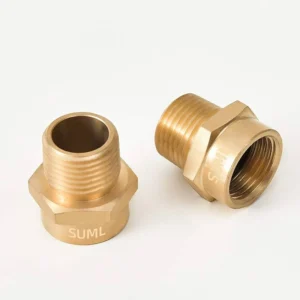
When thread standards don’t match, adapters provide a straightforward solution. Converting between BSP and NPT is common in global supply chains, especially when products are sourced from different regions.
However, not all adapters are created equal. Poor machining or low-quality materials can introduce new failure points. For long-term reliability, adapters should match the same standard of precision as the primary components.
Designing a shower hose for global markets means accounting for all of these variables—not just the nominal size.
At Jekare, shower hose systems are engineered with multi-layer construction, controlled thread tolerances, and compatibility across both BSP and NPT standards. This ensures not only that the product fits, but that it performs reliably under real-world conditions across different regions and applications.
Because in the end, true compatibility isn’t just about screwing parts together—it’s about making sure they keep working long after installation.
No, shower hose fittings vary by thread standards (BSP vs. NPT), affecting compatibility.
BSP uses parallel threads with washers, while NPT uses tapered threads that seal by mechanical pressure.
Make sure the sealing washer is in place and the connection is properly tightened.
One end has a swivel nut for flexibility, and the other end is more rigid for secure attachment.
Check for the correct thread type and ensure the hose matches your system’s pressure and flow requirements.