
If you want a quick answer: 2.5 GPM usually feels stronger, but a well-designed 1.5 GPM shower can deliver a very similar experience with much better water efficiency. The real difference isn’t just the flow rate—it’s how the system is engineered to control water under different pressure conditions.
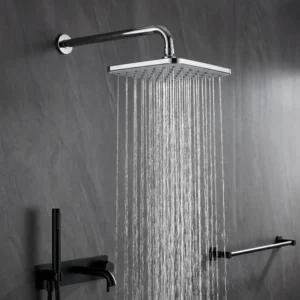
Most people think of GPM in simple terms: 2.5 GPM means more water, 1.5 GPM means less. That’s technically true, but it doesn’t tell the full story. GPM is measured under a standard pressure condition—usually around 60 psi (4.1 bar)—which is just a controlled test environment.
In real use, water pressure fluctuates, pipes create resistance, and internal showerhead structures reshape how water flows. Because of that, the same GPM rating can feel very different depending on the system behind it. In other words, GPM is a reference point, not the full performance picture.
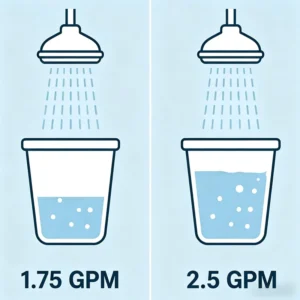
A 2.5 GPM shower often feels more powerful because more water is delivered every second, increasing droplet density and making the spray feel more continuous. That alone creates the impression of higher pressure.
However, real performance depends on how that water is delivered. The speed of the water, how it breaks into droplets, and how evenly it spreads all matter. If the internal nozzle design isn’t balanced, higher flow can actually create uneven spray—strong in the center, weak around the edges.
There’s also the way water transitions inside the showerhead. Depending on the structure, the flow can shift from smooth to more chaotic, which changes how it feels on the skin. So while 2.5 GPM can feel stronger, it doesn’t guarantee a better or more refined experience—it simply has more room to compensate for design limitations.
A 1.5 GPM system isn’t just a reduced-flow version of 2.5 GPM. It requires a different design approach to maintain a satisfying experience with less water.
At lower flow rates, water tends to break apart sooner as it exits the nozzle, which can reduce the feeling of continuity. The available energy is also lower, so without proper design, the spray coverage becomes narrower and less even. In addition, water at low flow is more likely to cling to internal surfaces, which can affect distribution.
To overcome these challenges, modern 1.5 GPM systems actively reshape the flow. They often introduce air to increase perceived volume, use more refined nozzle layouts to improve coverage, and rely on pressure-compensating designs to keep output stable even when supply pressure changes.
This is why a well-engineered 1.5 GPM shower can feel surprisingly strong—it’s not using more water, it’s using water more efficiently.
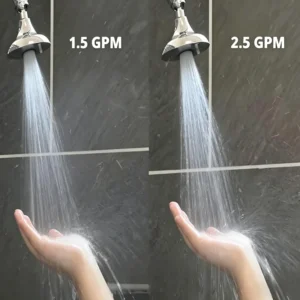
Not necessarily. This is one of the most common misconceptions.
GPM measures flow rate, while pressure is determined by the plumbing system. A lower GPM shower does not automatically mean weaker pressure. In fact, with proper internal design, a 1.5 GPM system can maintain strong spray force by increasing water velocity and optimizing how the flow is distributed.
The real factor to pay attention to is how the system performs across different pressure conditions, not just the GPM rating itself.
In real-world installations, water pressure can vary widely—from around 30 psi in low-pressure systems to 80 psi or more in high-pressure setups.
What matters is how the shower performs across that range. At low pressure, poorly designed systems can feel weak regardless of their GPM rating. At higher pressure, systems without proper control can produce excessive spray, misting, or noise.
This is why engineers focus on maintaining stable performance across different pressure levels, rather than optimizing for a single GPM number.
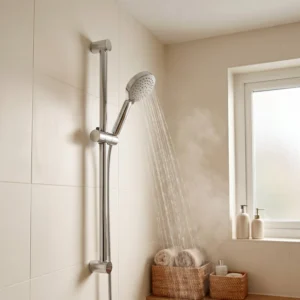
One reason 2.5 GPM systems have been so common is that higher flow can mask design weaknesses.
If the spray pattern isn’t well designed, more water can help fill in the gaps. If the internal valve isn’t precise, higher flow can smooth out inconsistencies. If the internal flow path creates resistance, increased volume can still push water through.
But this comes at the cost of efficiency. These systems may feel acceptable under ideal conditions, but once you introduce lower pressure or water restrictions, their performance drops quickly. That’s why modern designs are moving toward lower flow rates combined with better internal engineering.
If you’re working on projects that require water efficiency, regulatory compliance, or long-term cost control—such as hotels, apartments, or export markets—1.5 GPM is usually the better choice, especially when paired with a well-engineered system.
If the priority is maximum flow sensation and there are no strict water limits, 2.5 GPM can still make sense, particularly in high-pressure residential environments.
In today’s market, however, the trend is clearly shifting toward lower GPM systems that deliver similar performance through better design rather than higher water usage.
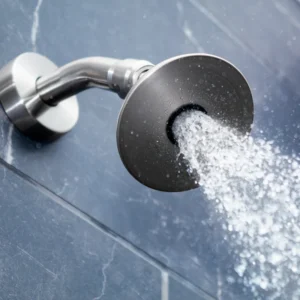
From an engineering perspective, GPM is just the output number. What really defines performance is how well the system controls water.
A high-quality system maintains stable flow without noticeable fluctuations, responds smoothly to pressure changes, distributes water evenly across the spray area, and behaves consistently across different environments.
These factors are what separate basic products from well-engineered solutions.
In real product development, GPM is typically just a requirement set by the client. The actual challenge is achieving consistent performance under different conditions.
At jekare, the focus isn’t just on reaching a target like 1.5 or 2.5 GPM, but on how internal components behave—how silicone valves respond, how flow-restricting structures shape the water, and how nozzle configurations affect distribution.
Because in practice, what matters isn’t the number itself, but whether that number delivers the same experience across different pressure systems and markets.
Yes. A well-designed 1.5 GPM shower can still feel strong and comfortable, especially with optimized spray patterns and pressure control. Poor design, however, can make it feel weak.
No. GPM measures flow rate, not pressure. A low GPM shower can still feel powerful if the system increases water velocity and distributes flow efficiently.
Yes, in many cases. Modern designs use air mixing and optimized nozzles to maintain strong perceived pressure even with less water.
High GPM doesn’t guarantee performance. Low water pressure or poor internal design can make even a 2.5 GPM shower feel weak or uneven.
2.5 GPM has been the traditional standard, especially in the U.S., but many modern systems now operate at 1.5–2.0 GPM due to water efficiency requirements.
Not entirely, but it’s becoming less common. Many markets are shifting toward lower flow rates with better engineering to maintain performance.
Use a better-designed showerhead. Optimized nozzles, air mixing, and pressure-compensating features can improve performance without increasing flow.
1.5–1.8 GPM is often preferred today. It balances water efficiency with performance, especially when supported by good system design.